I recently learned about an extraordinary archeological discovery, that of an ancient high-tech culture that really was drowned in a cataclysm. It just didn’t happen to be the one Plato was thinking of when he described Atlantis. He was probably referring to the Minoan towns destroyed by the eruption of Thera (modern Santorini) in about 1600 BCE, but this was a place vastly older and farther away – the Neolithic Chinese town of Jiahu:
Excavation of Jiahu, showing skeletons. Image from a travelogue in iNews
The site is in central China, Henan province, and is 9000 (!) years old. It’s on the plains between the Yellow and Yangtze rivers. It was discovered in the early 1960s, and has been under intermittent excavation ever since. It’s now a tourist attraction for the town of Wuyang.
So what makes this high-tech? At a time when almost all societies were still nomadic hunter-gatherers, this place had:
Agriculture – the first evidence of rice cultivation in China, and also millet.
Alcohol – pots were found with fermented rice, honey, grapes and hawthorn residues. Dr. Patrick McGovern at U Penn figured out the recipe and Dogfish Brewing in Delaware made it as Chateau Jiahu. This is the oldest alcohol recipe known.
Music – About 30 bone flutes, generally in a pentatonic scale. They were made from the wing bones of the red crown crane, an Asian bird admired to this day for its elegance but now endangered. They’ve been able to date the flutes and see a progression in quality and tonality. Tech advanced even then. More here from a curator of their exhibit in the Henan Museum: Jiahu Bone Flute of Wuyang.
Writing – There are tortoise shells with symbols carved on them. No one can read them, but they are grouped and the pictograms do recur. Understandable writing only came many millennia later.
Domestic animals – pigs, poultry, dogs, and even some cattle. A pond was used to raise carp. Food was plentiful and good.
Defense – the village was surrounded by a moat. The human skeletons found do not show signs of violence. They lived to a decent age too – maybe 40 on average. They appear to have been an egalitarian culture – there are not many differences in grave goods among them.
Just imagine being a primitive hunter slogging across the plains and coming upon a place like this. A place where people lived long and peaceably, ate well, and spent their time drinking, making music and crafting written prayers to the gods. They doubtless would not let you in, but it must have looked like paradise.
The village appears to have had between 250 and 800 people in it at a time. It lasted for 1300 years until a flood from a nearby river drowned it in 5700 BCE. It was evacuated in an orderly manner – no tools or household effects were left behind. The flood and its sediment is undoubtedly why it was preserved, rather than reworked by millennia of later settlement.
It didn’t have the trappings of the Tomb Raider Atlantis – lasers, god statues with glowing eyes, levitating pyramids – but it sure looked sophisticated. There is as much time between us and the Great Pyramid, 4500 years, as there is between the Great Pyramid and Jiahu. There was a lot going on very early that we know little about.
Most of the stuff in your daily life, of course, is made in the US. That’s groceries, and gasoline, gas and electricity, and construction materials like lumber, bricks, glass, and drywall.
Yet your clothing almost certainly isn’t, nor are most manufactured goods. Even for major goods like cars and planes, a big fraction is made elsewhere. E.g. for the Boeing 737 MAX, a bit under half is foreign-made, and that includes the engines from LEAP in France.
This is unsustainable. It’s been great for the 1%, but everyone else needs work. It’s going to be tough to bring it back, though, and I recently came across two examples of why:
This is a clothing manufacturer near Portland Maine. I have one of their excellent hoodies:
It was founded by a couple, Ben and Whitney Waxman, who had been in politics. They made a point of sourcing every single component in the US: the fleece and cotton materials, the drawstrings, the thread, the zipper, and the printing. Most of the equipment for this is gone, as is the expertise in running it. They found a few old-timers to re-create it, but that was difficult and expensive.
They were also determined to do right by their workers, and they’re unionized. They have training programs to make people efficient, and offer flexible work hours. That turned out to be critical to hiring women.
The trouble is that they can’t find many native Americans to do this tedious work for $18 an hour. Their workers are almost entirely immigrants. They come from a wild range of places, from Turkey to Central Africa. It’s a good deal for them, as this is a lot of money compared to their home countries, and their bosses are not the usual crooks, but it’s not that great by US standards.
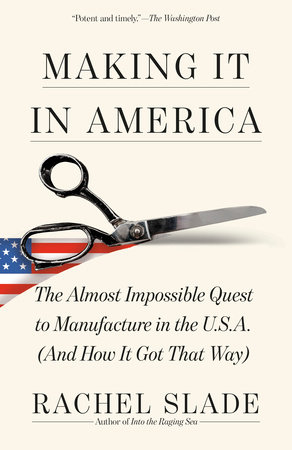
Their difficulties are well-described in “Making It In America” by Rachel Slade (2024). She follows the Waxmans from 2015 as they search for suppliers, battle anti-immigrant sentiment, and deal with many setbacks.They were hit hard in 2019 by bad quality inputs, and then by the pandemic. They switched to making masks, but got hit again when Chinese imports started up again.
Their saving grace was that they largely sold to unions and non-profits. Any time an organization needed logo-branded apparel for a convention or merch, they could supply it in bulk. They do now sell retail, and that’s where I got mine, and are thinking of opening their own stores. They currently have about 75 workers and have revenue in the low millions, although that’s hard to determine. That’s not that much after ten years, but I wish them all the luck.
The Smarter Scrubber
I came across this in a Youtube video on the excellent engineering channel SmarterEveryDay by Destin Sandlin:
A friend of his, John Youngblood, went through the common experience of inventors – he found a problem with the existing way things were done, and devised a better solution. In his case, the problem was with barbecue grill scrubbers. They’re made as wire brushes to scrape off the baked-on grease on a grill. Unfortunately, the steel bristles break off and can get in one’s food. If you swallow one, it’s bad news as it perforates your digestive tract.
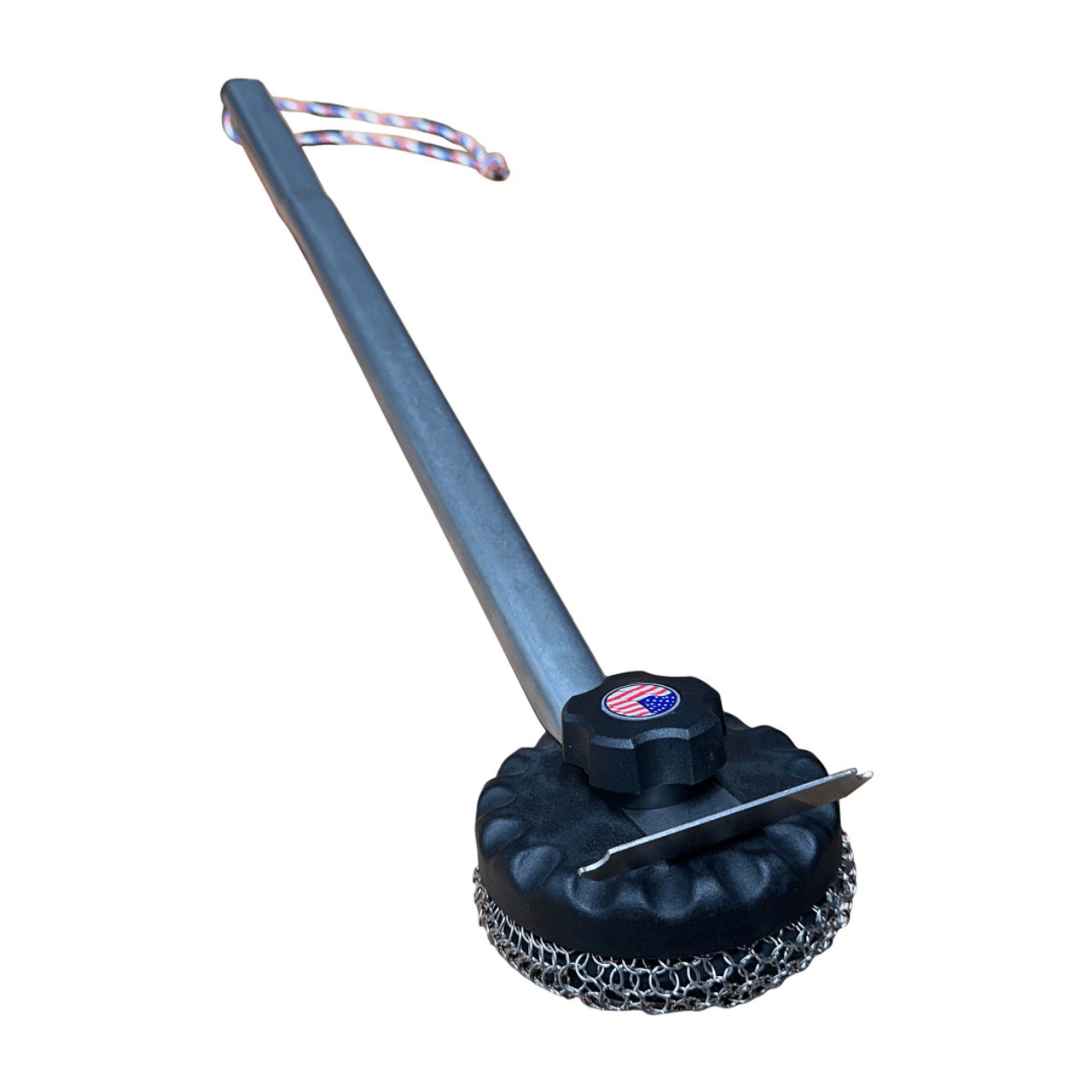
So instead, he thought to make the scrubber with chain mail. Now the wires are tightly bound and won’t break. The head can also be run through a dishwasher to clean it. This is the kind of Aha! moment that every engineer hopes to feel. Sandlin loved the concept and thought to try an experiment – could this be made entirely in the US? He had been dismayed when his home state of Alabama was completely unable to make PPE during the pandemic, except for one old guy who knew how to make injection molds.
He also wanted to make it in the US because Amazon encourages Chinese manufacturers to rip off American products. They tell them exactly what is successful and put the knockoffs on the same search page. Because the quality is worse and they have no development expenses, they can undercut the inventors. Amazon then ignores patent infringement claims. Don’t ever buy anything from them.
Sandlin does a nice job describing the whole design process for the scrubber. He had to try a lot of different pads and schemes for attaching the mail to the head and patterns for the chain mail. Finding a US supplier was hard and they couldn’t get large quantities. The simplest and most standard part, a 1″ 1/4-20 stainless steel bolt, turned out to be the hardest of all. Chinese suppliers sell if for 9 cents, and the best he could do was a Massachusetts supplier for 35 cents.
What really depressed him was discovering that he couldn’t even make the molds for the head parts in the US. All that skilled work is now in China too. The US bosses fired the expensive mold makers in favor of cheaper Chinese ones just like they fired US workers. He ended up doing it himself, with a lot of help from old experts. That was enjoyable, but again not sustainable. One ray of light is that there are new ways to make smooth metal molds with 3D printing. Yet there’s still a lot of lost know-how in what the molds actually work.
$75! And on back-order. That’s a lot compared to a standard brush, but it won’t, you know, kill you.
Sandlin put a lot of effort and money into this minor product, far more than any ordinary venture would. It would have been a lot easier and cheaper to do in a place with a working industrial infrastructure. He could do it because he has 12 million Youtube subscribers.
Yet he’s also doing it to make a point. It’s going to take a lot to undo the damage the oligarchs have done to the US economy. Trump blathers about bringing manufacturing back, but that’s all a pitch for the rubes – his actual actions have been entirely counter-productive. It’ll take clear and concrete actions like Sandlin’s and the Waxmans’, and therefore proof to politicians about how to really help.
We’re watching the tremendous Ken Burns PBS series “The American Revolution”. It stresses that the British tried to hit the Americans suddenly and hit them hard. They would disperse this disorderly rabble with a whiff of grapeshot. They burned everything they could reach along the coasts, and held New York, Charleston and Savannah for the duration of the war. They saw that all the colonies were at each others’ throats and thought they would fall in line once they saw the danger of their treason.
The Royal Navy attacks Long Island on the way to taking New York, 1776
Well, that didn’t work. The opposite happened – the colonials all realized that the British were their true enemies and put aside their differences, at least briefly.
This strategy has failed against the US again and again. The Confederates thought that the greedy and mercantile Yankees would sue for peace once they took Fort Sumter rather than risk their profits in the Civil War. The Japanese Empire thought the same thing when they destroyed almost all of the US Pacific fleet at Pearl Harbor. That display of valor would surely cow the fat and dishonorable Americans.
It’s also what Trump and Musk thought this year. Within days of getting into office they were destroying federal agencies. It was wildly illegal, but they wanted to overawe the opposition with a demonstration of power. Musk seized the federal IT resources while Trump seized all the police power he could. He set up concentration camps and has masked goons grabbing people off the street. He threatened universities and news organizations and extorted them for hundreds of millions. He talked blithely of third terms and military occupation of blue cities.
That too has united the opposition. The October 18th No Kings protest was the largest in US history, and occurred in every state. The November 4th elections were the first since his ascension and were wipeouts for the GOP. The legal system has ruled against him now dozens of times, even though the corrupted Supreme Court still rules in his favor. It’s got to go.
The Democrats have set aside their endless squabbling over appeals to the working class versus appeals to marginalized groups to focus on the real threat. Even the GOP is cracking. They backed him as an outsider candidate who was not as tarred by their massively unpopular policies as Mitt Romney was. They liked railing against neoliberals who lose wars and export jobs, but now find themselves backing a pedophile who is stealing everything not nailed down.
The British obviously should have set the colonies against one another. They could have offered representation in Parliament to Virginia and New York while isolating restive New England. The Loyalists in both places would have approved, and probably sent troops. The British couldn’t do that at the time because they were too proud and upset. Yet the Revolution was such a disaster for them that they learned that lesson well. They applied that kind of divide-and-conquer strategy in India and ruled the sub-continent in spite of being out-numbered a hundred to one.
Trump and Musk are also too blinded by pride and hatred to be smart about their takeover. They’re seeing the pushback now. Let’s hope they continue to fail, but that the conflict doesn’t become as brutal as the Revolution!
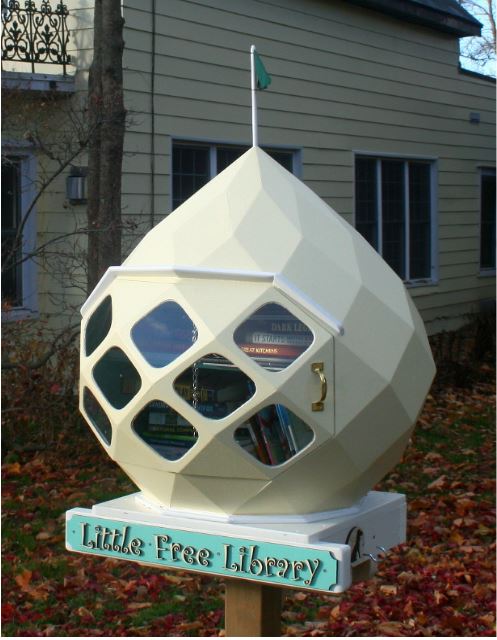
I was out taking my constitutional the other evening when I noticed a new little free library. There are five of them within just three blocks of my house:
Hmm! I see from the Little Free Library site that about 200,000 of them have been installed around the US since the program began in 2012. People register their sites with them for a fee so they appear on their finder app.
They say that on average one book is borrowed from each library each day, which would be about 70 million a year. That’s a visible percentage of the ~800 million book copies sold each year, and is even a few percent of the ~1.5 billion books lent by the 9,000 public libraries in the country. My town of Arlington may have a lot of LFLs just because it’s especially literate – our own public library hit one million items checked out in FY25, which is ~25 per person in the town.
The site sells kits for them, formerly of wood but now of a more durable composite for about $440. That seems like a lot, and as you can see from the above a lot of people make their own. I especially like the one from George Hart, an old college housemate and now free-lance mathematician and sculptor:
He came to this style through his work on the geometric construction toy the Zometool. It has been used in architecture and is a favorite at Burning Man.
Now, one reason these libraries are popular could be because people are transitioning from paper books to digital ones. Books do occupy a lot of home space, although they do furnish a room. A lot of the items I see in these libraries are old textbooks and school workbooks. Those are entirely digital these days. Yet e-books and audio books are still a small part of the publishing world, accounting for only about 20% of revenue. Print book unit sales continue to rise and had a surge during the pandemic.
Yet books can’t be kept forever, and you hate to just throw them away. Most are still readable, so someone should get some use out of them. It’s not like throwing away a toaster. Books are art, and the purpose of art is to affect the emotions, so it’s no surprise that people have fond feelings for them. They want someone else to enjoy them the way they did.
Another similar service has grown up recently – Little Free Pantries. They contain non-perishable food items where people can take what they need and leave what they don’t:
Same style of hutch, different product. It’s sad that this wealthy country needs these, but here we are. The organization promoting them is much more casual than the LFLs. They appear to be tracking about 2300 of them, and they’re often paired with LFLs.
Let me finish by pointing you to a recent New Yorker cartoon – The Tiny Library of Babel by Adam Douglas Thompson. As in Borges’ original story, books are a road into infinity! Even these small outposts can lead one endlessly on.
The standard engineering story goes like this – someone thinks of a good idea, they found a startup to develop it, it gets backed by venture capitalists, it becomes a hit, everyone gets rich, and the field moves forward.
Boy that doesn’t happen often! I recently came across a much more typical journey. It was a lot more tortuous, and it took a really long time, but it does have a happy ending. It’s the path of low-power mesh networking from concept to craze to finally useful product. I heard one of the principals in this whole project, Lance Doherty, speak about his almost 30-year journey to actually make this work.
So here’s how this story went:
1997, Proposal. Prof Kristofer Pister of UC Berkeley cones up with a cool idea – Smart Dust. He could see that chips were getting steadily smaller and cheaper, and foresaw a day when they could be scattered around like grains of rice. Each would have a sensor and a tiny radio with just enough power to send a signal to another dust mote nearby. That could pass it on to another mote and another until it reached some useful destination.
He gets funding from DARPA, the research arm of the Pentagon. For obscure historical reasons they’re the only federal agency that funds research into chips and computers. They have a creepy purpose in mind – they want to track every soldier and vehicle on a battlefield, the better to kill them.
2001, Demo – With the help of ace grad students like Doherty, they get a system working. It uses commercial parts and so is about 1″ on a side, but it can be deployed by a drone and dropped on the sides of roads to watch for vehicles:
It has a magnetometer that can detect the steel in a vehicle by the way it changes the Earth’s magnetic field, and can pick up cars 5 m away and trucks at 10 m
2004, Startup – They spin it out into a startup, Dust Networks, with venture capitalist money. Joy Weiss comes in as CEO. They figure out the key to the whole concept – each node must be time-synchronized to all the others so that it only has to turn on its power-hungry radio receiver when another node is likely to be transmitting. Leaving the receiver on all the time will kill whatever power is available.
They ride a rising wave of a new Valley fad, the Internet of Things. Just as they did with computer networking and later autonomous driving, the Valley follows DARPA’s lead. They think that the Internet will now be absolutely everywhere. They start adding processors and WiFi to refrigerators and washers and stoves. The high point is when Google acquires Nest Labs and their smart thermostat in 2011 for $3.2 billion. They envision acquiring data about absolutely everything in people’s homes and lives, the better to sell to advertisers.
That fails. The thermostat market is tiny and easily served by much cheaper widgets. No one wants talking refrigerators that creepily track your grocery consumption. No one trusts Alexa voice recognition boxes in every room, and rightly so.
Dust Networks also goes down around this time. They had some success in wireless networks in factories, with an installed base of maybe 20,000 places, but that’s not actually all that many for a chip company.
2011, Acquisition. They get bought by a strong Valley analog chip company called Linear Technology. Linear had done extremely well by building radio chips, analog-to-digital converter chips and power management chips, ones that change one DC voltage efficiently into several others. These are needed everywhere. They explicitly avoid getting into price wars for commodity parts since that drops profits to zero. Instead they aim for steadily higher performance and better features, and that lets them do fun engineering.
They discover an ideal use for these low-power networks – electric vehicle battery packs. These contain dozens of battery cells and each one of them needs a control and monitor chip. The chips can tell how much charge a battery holds, what temperature it’s at, and most crucially, whether it’s going to catch fire. Lithium battery fires are horrible. They’re very hard to extinguish and emit toxic smoke. If the battery is mis-charged, it can heat itself up so much that it goes into thermal runaway, and you have very unhappy car owners, assuming they live.
Running wires to all these control chips is a nightmare for the wiring harness, for labor, and for reliability. So what if they could all be connected by radio instead?
Complicated wired scheme on left, simple wireless on right
You don’t need to send a lot of data back and forth, just enough to know what each battery is doing. The connection has to be extremely reliable, and the power draw has to be minimized since it’s running on the battery itself. Yet this lets you connect the chip to the cell when it’s first made and then follow it for its entire life. You can tell what happens to it in the factory, in the truck that delivers it, when it’s installed in a car, during the car’s lifetime, and then in whatever other use the battery is put to after the car is done. You can know the cell’s capacity exactly instead of having to build some margin in in case of mis-measurement. That alone lets you get another few percent out of each cell. Plus you save the weight of the wiring, and can reconfigure the packs easily for different models.
By 2016 they have installed these wireless Battery Management Systems (wBMS) in an electric BMW i3 and driven it all over the place. It works great! They show it at the 2016 Electronica conference and it’s a smash. They think “Ah, it’s working at last.”
2017, Productization – That’s when reality kicks in. Proving that the radio data will get through in every possible circumstance is really hard, but car companies won’t accept it without thorough testing. Linear doesn’t have the resources to do it. Yet their Massachusetts competitor Analog Devices does. They buy Linear in 2017 for $14.5 billion with about 25% in stock and the rest in cash.
They set up a testing facility at the ADI plant in Limerick, Ireland. It’s got a turntable that can hold a whole battery pack and orient it every which way. They surround it with radio antennas so they can blast it with every kind of interference.
It takes years to work out all the possible failure modes and needs engineering groups from all over the world. Yet then GM agrees to use it! They had some bad fires with the first Bolt model and were being extra careful for the next ones. They initially called it the Ultium battery system, but that was too hard to explain and they’ve dropped it. GM starts shipping it in 2021.
A few Ultium models
At the same time they’re approaching all the other car companies. Now that one major company has accepted it, it should be fine for everyone, right? Ha. This company wants the controllers to be on all the time in case the batteries overheat in a sunny parking lot. Yet it all has to work on the 12V lead-acid battery, since everything else in the car is designed around that. If it sits there for a month, the idle power will kill the 12V battery, so nuh-uh. That can be fixed in software, thankfully. This other company wants to get a lot more bandwidth out of each controller to monitor it more closely. Yet another wants the maximum level of safety for all the chips and the design process that goes into them.
Every new user has new demands. It’s wasn’t until they got to the seventh customer that they could actually use the system as is. That didn’t happen until this year. There are bound to be further glitches as the scheme spreads, but they’re finally off and running.
So from initial concept in 1997 to shipping in 2021 is 24 years. That’s a good chunk of a career! It’s been a long road. Yet it’s saving lives and easing the electrification of cars, and ultimately helping the planet. It didn’t work to find soldier’s footsteps (it’s not used in Ukraine even now), and it didn’t work to network toasters because no one cared, but it finally found a place where it’s really useful. Let’s hope they now find some more!
Our town has a theater, the Regent, where a lot of tribute bands come to play. They do covers of Elvis, Sinatra, and the Eagles, which are unsurprising. They were all massive stars with the usual songs about falling in and out of love.
Yet they also have Pink Floyd cover bands regularly, and I saw one last weekend – Floydian Trip:
Laser light shows and everything!
None of these musicians were even born when “Dark Side of the Moon” came out in 1973, yet they could perform it precisely. Their female singer (and band lead) Stephanie Jones could even do the extraordinary wordless wail from “Great Gig in the Sky”. I happened to be sitting next to her father, who had driven down from Maine to see them. She got a music degree from Yale, but now works in Manhattan doing HR at a finance firm. The band does dozens of these gigs a year. So she’s a typical Millennial who happens to be completely taken by Boomer prog-rock.
I am a Boomer, and I do remember hearing Dark Side when it was released. I was driving home late one night with my dad when a radio station played the whole second side. We got home in the middle of the side and I found the station just to hear the end. It caught my ear even over a car radio. A while later in college I had a housemate who would get stoned and listen to it every single night. Floyd and Springsteen were the soundtrack of my college years.
The early Floyd is unlistenable (at least to me!) and they disintegrated after “The Wall” (1979). Their main material was only four albums (“Dark Side”, “Wish You Were Here”, “Animals” and “The Wall”) over 6 years. That’s fewer albums and less time than even the short-lived Beatles.
So this is music from 50 years ago. There isn’t a single love song. It doesn’t even have the rage of punk or the violent impulses of metal. Yet Dark Side is still in the top-selling album lists. Small cover bands like this play it all the time, and large ones like Australian Pink Floyd fill big venues. What’s going on?
I think it resonates because it’s talking about cracks in the world. Their founding genius, Syd Barrett, fell into those cracks via schizophrenia. Something broke inside him, and they see similar breaks all over. In “Brain Damage” on Dark Side, they sing that The lunatic is in my head, but the lunatics are also in the hall, where The paper holds their folded faces to the floor. In “Comfortably Numb” on The Wall, they sing:
When I was a child I caught a fleeting glimpse Out of the corner of my eye. I turned to look but it was gone, I cannot put my finger on it now, The child is grown, the dream is gone.
That same theme of loss permeates Wish You Were Here, where success made them trade A green field for a cold steel rail, A smile for a veil. It’s in “Time” on Dark Side, where Every year is getting shorter, Never seem to find the time, even though the Voice of God in the form of David Gilmour’s guitar riffs is telling them to wake up and get on with it.
Then there’s the ending of Dark Side, “Eclipse”, the biggest climax in pop music, beating even “A Day in the Life” on Sgt Pepper. Roger Waters sings about how All that is now and All that is gone and All that’s to come and Everything under the Sun is in tune, But the Sun is eclipsed by the Moon. Everything seems to be going along fine, and then the shadow falls. Who hasn’t had such an experience? That’s almost as universal as falling in and out of love. No other band captured it in quite the same way. No wonder they’re still getting covered.
Last May 31st I attended Technology Day at MIT, where the school presents talks on all kinds of interesting research to its alumni. Commencement is always the day before, and the alumni reunion events are that evening. I’m a big fan of these talks and have written about previous years here: 2024, 2023, 2019, 2017, and 2011, Videos of the three sessions can be seen here:
Yet this year it had a much darker tone. The Trump administration is explicitly trying to destroy US universities and scientific organizations. They are canceling research contracts, defunding science agencies, denying visas to international students and even threatening to remove accreditation. Even the research that is kept on will have its institutional overhead (“indirect cost”) cut from a median of 56% to 15%, meaning the federal gov’t will pay almost nothing for the facilities of the university that make the research possible.
At Trump’s insistence, Congress just raised the tax rate on leading university endowments by six times, from 1.4% to 8%, significantly damaging their finances. Former MIT president Rafael Reif wrote about the effect of this tax in the Boston Globe: Big Beautiful Bill Will Raise the Cost of College. The tax is as large as MIT’s entire undergraduate financial aid package, which currently grants free tuition to any student with a family income of less than $200K. Incomes of less than $100K get free board as well.
So how did MIT respond on Technology Day? The first session was devoted to fascinating medical advances. The first speaker (11:03) is looking for ways to detect tiny ovarian cancer tumors using optics and AI. The second (19:39) is planning how to rework the US insurance system for greater equity. The third (28:36) has made extraordinary progress on robotic prosthetics, and lost his own legs in a climbing accident. The fourth (36:44) has new attacks on the ancient and deadly disease of tuberculosis, against which we only have one fading vaccine.
They all talked about how the funding cuts were ruining their plans. At the very end the moderator asked “What’s the one missing piece that would aid your research?” One said flexible funding to pursue strategy changes and another thought there should be more focus on therapeutics across a diverse community instead of research. Yet the last to speak, Prof Bryan Bryson, said:
What we need is you. We need you to go out and talk to everyone about the wonderful things you’ve heard here. Academia is not some ivory tower – it’s attacking problems that affect everyone. Someone in your life has had TB or cancer or a terrible accident. When people ask ‘What do they do over there?’, say ‘They help you.’ Go out and tell twenty people about the amazing things you see here.
So that’s what I’m doing!
Yet the leader of MIT, President Sally Kornbluth, was not as inspirational. In the third session above, she is interviewed by the head of the alumni association, Natalie Lorenz Anderson, ’84. At 25:22 she asks Kornbluth very gingerly about “How do you think MIT should be positioned to meet the challenges of the day?” She says that in the worst case scenario, they could see their budget cut a third (!). In that case, she would cancel some programs outright to favor maintaining others – “We will not spread the peanut butter thinly.” They have joined a group of 14 universities to sue to prevent the new indirect cost rate from going into effect and so far have gotten a restraining order to prevent the change.
What struck me, though, was how accepting she was of this situation. This country is in the midst of a right-wing, foreign-backed coup. A concentration camp has been built in Florida, and masked, armed police are kidnapping people off the streets, including students. The president is openly senile. Congress is openly giving away the federal government to their donors. Yet she still keeps going down to Washington, telling people that MIT is crucial to the medical and defense and technical innovation pipeline. If they cared about any of that, they never would have started down this road. If they cared about the general good of humanity or America, they would not have destroyed millions of tons of food aid for Africa, and millions of doses of vaccines. She cannot accept that these people consider the likes of MIT to be the enemy. She was attacked personally on Dec 5, 2023 when she was hauled in front of a Congressional committee headed by Rep Elise Stefanik. They called her an anti-semite for not crushing the student protests against Israel’s horrific treatment of the Gazans. The attack succeeded in ousting the presidents of Harvard and U Penn. Yet she still persists in talking to them. She cannot think of anything else to do.
She is bound by the constraints of her position, just like the helpless Democrats. They can only work within the system even as it is failing in front of them. What it will take is general public disgust and revolt. That’s what Prof Bryson was asking for. These people are stealing your present in the form of federal support for public goods, and stealing your future when they go after the likes of MIT.
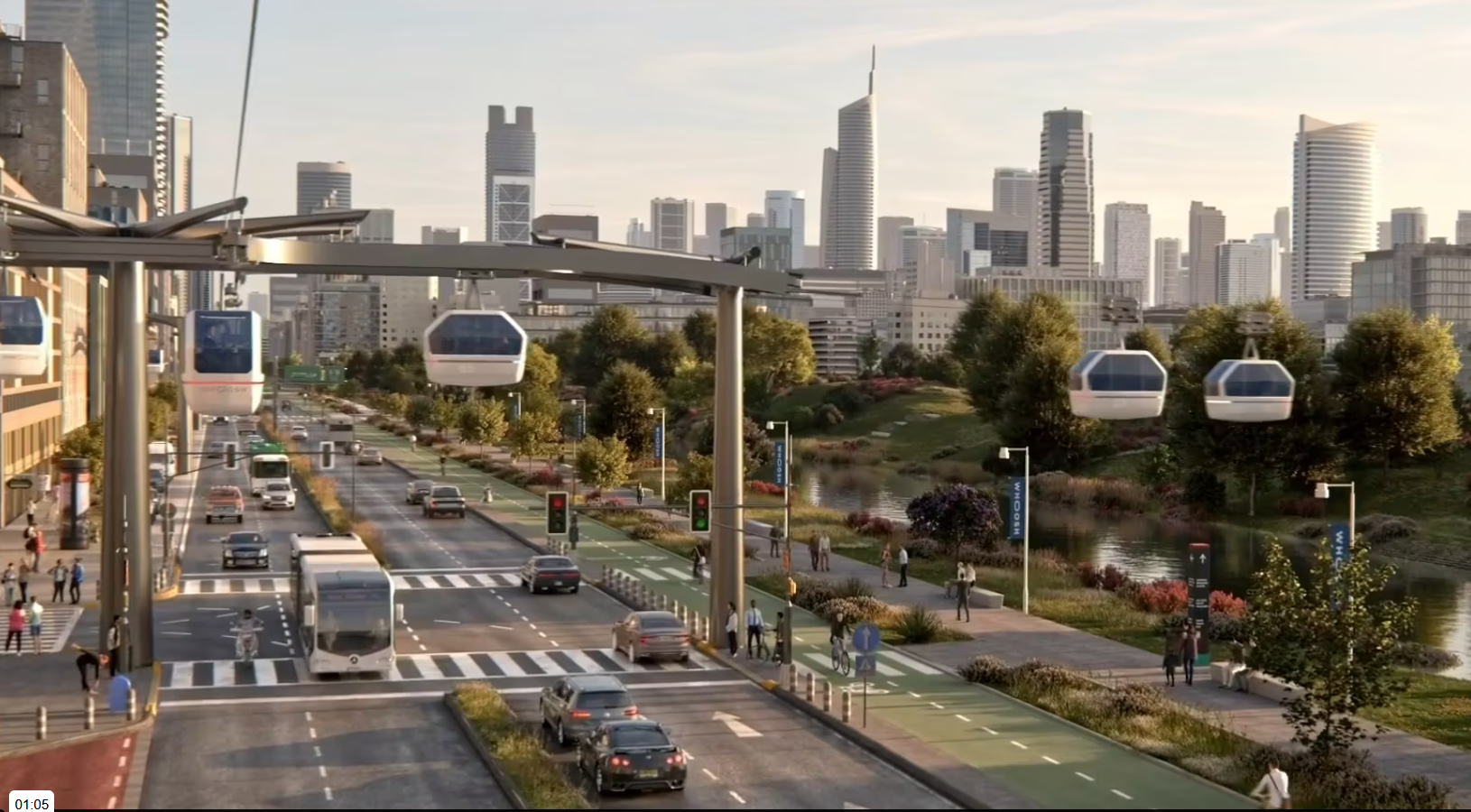
A New Zealand-based company, Whoosh Solutions, is building a new kind of urban transit system – a network of overhead fixed cables that are used by self-driving battery-powered gondolas to go from point to point. They can switch from one cable to another, unlike regular gondola systems, and so can take any route through a network to get around without having to change cars or stop. They let people on and off at stations every few blocks at ground level:
CGI street render from Swyft Cities
They’ve built a quarter-scale model in the resort town of Queensland NZ in the middle of the South Island, and are looking to build a full system there. They’re also looking to build a system in the Houston suburb of Sugarland. They were picked by the Google Transit team as a favored solution, which was then spun out as Swyft Cities. They’ll build the systems while Whoosh develops the tech.
The cars can hold up to 5 people, and so can take a family or someone with a lot of luggage or delivery packages. They’re a minimum of 9 meters above the ground, and so have lots of clearance over the streets. They run at up to 30 km/hr and go directly to a destination, so you can get there in a similar time to a car in a city. The cars are much safer than ground cars, which have to deal with drunken or distracted drivers, and kids running into the street, and the occasional animal.
So this has a lot of advantages over other mass-transit schemes:
The cable towers and stations take hardly any land and far cheaper to build than light rail or even bus lanes. Whoosh estimates it at $5M / km vs $100M / km for rail. Boston would love to be able to build for $100M/km! Multiply that by 10 for New York. The towers are typically 150 m apart, and can be more in sparse areas. The cables can easily cross rivers and gorges.
That also means they can be built quickly, like in years instead of decades. The system can grow to reach all kinds of areas now badly served by transit.
Unlike a gondola on a fixed cable, the number of cars can vary with demand. A lot can be deployed at rush hour, and they can be taken offline at night for maintenance and recharging.
They can come on call like a ride-share, instead of at fixed intervals like a bus or train, decreasing transit time and increasing utilization.
The car entrances are at the same level as the platform, so there’s no step up or down. This is great for accessibility. This is a constant problem with buses, which have always had trouble with wheelchairs, and for regular cars for that matter.
That also means that you can wheel hand trucks into them for deliveries.
They can run in all weather, even when snow blocks roads. Queenstown is a big ski resort town. High winds are bad though.
You get great views as you travel! Being in subway tunnels is always oppressive, and a bus is little better.
It’s even more energy-efficient than an electric vehicle (EV) – the cars run continuously without many stops and starts for traffic, and the rolling resistance on the cable is low.
Like gondolas, they can handle elevation changes easily, like mountains on a city’s edge. Trains can’t handle height changes at all, and even roads have problems. This is why many South American cities like Medellin, La Paz, Caracas, and Rio have already built big gondola systems.
It’s riding the global trend towards EVs. All the same battery, inverter, and motor tech can be applied. The wheels are just on a cable instead of asphalt. The cars should ultimately cost only tens of thousands, and can be upgraded easily over time.
Yet there are disadvantages too:
The capacity will be much lower than a train. A typical train can hold 200 people and arrive 10 times per hour for 2000 people per hour. Here there are only 5 people per car max, so at one minute per car that’s only 300 people per hour. That’s about like a bus. This was also the problem with the small tunnels of the Boring Company. Pods just can’t hold as many people as long cars.
Many people don’t like heights and won’t go on something that swings in the air.
This is new tech from a tiny company in a tiny country, and so lacks scale. Everybody builds buses and subway cars.
The biggest threat to it, though, is probably robo-taxis. Vast amounts are being invested in this by tech overlords who see automobiles as the next grand market to conquer, now that they’ve seized finance and advertising. A hundred million households in the US spending $500/month on their cars represents $600 billion. That’s why Waymo has put tens of billions into their autonomous system, and that’s what props up Tesla’s valuation at its ludicrous price-to-earnings ratio.
Yet Whoosh has some advantages here:
They’re much safer. They don’t have to deal with all the random events of the street. Even the most highly tuned LIDAR/radar/V2V system is going to kill people who wander around. We only accept this now because there’s little other way to get around easily.
They don’t need roads, which suck. They cut up neighborhoods, destroy green space, are noisy, and are hugely expensive to maintain. They’re constantly damaged by trucks and frost heaves and sewer/water work. Big fast roads like highways are a menace to humanity.
They’re green from the start, without the legacy fossil fuel systems that have poisoned landscapes and now the atmosphere.
They’re quiet! Even EVs make a lot of tire noise, while these have rubber wheels on cables high in the air.
So will this go anywhere? The Google interest is promising, but the hype around self-driving is overwhelming and the entrenched auto industry is hard to overcome. They killed street cars long ago, after all. This might be yet another tech that gets more traction (ha!) outside the US than in it.
… was April 19, 1775, and that was plenty! That’s when the Regulars (both sides thought of themselves as British) retreated down Concord Road (now Massachusetts Avenue) from the Battle of Lexington and Concord. They had gone out there to seize arms stores from the restless colonials, but the locals were tipped off by fast-moving riders and mustered to meet them. The Regulars weren’t able to capture much and so retreated back towards Boston. The fiercest fighting along the way happened at the Jason Russell House in what was then called Menotomy and is now the pleasant suburb of Arlington Mass. It’s about four blocks from my house, and has been a town memorial since 1923. It’s full of bullet holes right to the present day!
This year is the 250th anniversary of this beginning of the American Revolution, so there were big re-enactments. These happen every year, and there are standard groups who replay the scene. Everyone picks a named soldier on one or the other side and dresses as accurately as possible. Townspeople in colonial garb are also present. They’ve worked out just where everyone fired and where people fell. A record number of people came in costume, and were met by record crowds. Arlington Community Media Inc captured the whole thing:
My daughter did a lot of the filming! ACMI draws on a lot of high school students for camera people.
This battle has been analyzed to death, of course, but I got an unusual impression when actually watching it. The standard story is about the rigid habits of the British infantry, marching along in close formation in their bright uniforms while the adaptable colonials used guerilla tactics against them, firing from any available cover. No wonder they lost, goes the standard line – the colonials out-smarted them.
Yet that’s not what you see here. The colonials were a ragtag bunch who knew little about fighting. The regulars flanked them by having separate platoons going through the woods on either side of the Road. The colonials thought the house provided cover, but the regulars came up behind them, shot them to bits, and then bayoneted everyone who moved. Jason Russell himself (then age 59) was killed on his doorstep. The close order marching let them fire in unison, and training let them do it quickly. Their training also let them march forever – they had already walked some 30 miles that day. The distinctive uniforms meant they could tell who was on their side, and could kill anyone else.
In a word, they were terrifying. When you saw the regulars coming, you got the hell out of the way. The colonials outnumbered them three to one, but couldn’t stop them from getting to Concord or from beating a fairly orderly retreat. About the most they could do was tell the King that they really, really didn’t want his rule any more. It was only because of the punitive regime of General Thomas Gage that it had come to this. He returned to Britain afterwards in disgrace.
After this battle the colonials laid siege to the city of Boston, which were the worst 11 months in its 400-year history. People starved and froze. The city then had only narrow land routes to it, (which was the reason it was there in the first place) and those were easily cut off. The Royal Navy attempted to supply it by sea, but privateers harassed them constantly. There was only one other serious battle, that of Bunker Hill, which was a Pyrrhic victory for the British. When Henry Knox brought stolen cannons to Dorchester Heights overlooking the city, it became impossible to stay, and the British cleared out in days.
The bitterness over this war lasted for a long time! In Arlington itself the dead among the regulars were buried in an unmarked mass grave. It wasn’t until last year, 2024, that the town put up a marker for them:
Dedicated Sep 7, 2024. In the town’s central cemetery. Description
In the two and a half centuries since, nothing else of this import has happened, for which all of Arlington’s citizens are grateful!
I first leased a Tesla Model 3 in Dec 2019. It was the fastest and smoothest car I had ever driven! It was so quiet and had so much zip. Its interior was elegantly sparse – it had just a single large display and two thumbwheels on the steering wheel. I knew something about EVs since I had already been leasing a Chevy Volt, and it was a distinct step up:
New Model 3 on left, and old Volt on right. I’m fond of blue! (Jan 2020)
I could recharge it at home, and was able to put plenty of miles on it overnight with just a 110V cord. If I did need to charge on the road, the Tesla public chargers were far better than the “standard” CCS chargers. Tesla’s just worked when you plugged them in, while every other system needed a phone app that failed to connect a lot of the time. The car had fun extras, like the Emissions Test that made fart noises when you moved on a seat. The kids keeled over at that. It had a Santa mode where the turn signals made jingle jangles and the surrounding cars turned into reindeer.
As time went on, the honeymoon wore off. It was annoying to not have a fan control or a windshield wiper control, and the automatic wiper worked really badly because they skimped on the rain sensor. There was no blind spot detection – you had to look to the right at the screen to see cars to your near left. Every other car puts a yellow light on the outer edge of the mirrors if something is near. The other warnings were way too conservative, and beeped at you all the time. The range dropped a lot when the heat was on. The snazzy recessed door handles would freeze shut in the winter. The sparse interior started to look cheap instead of elegant.
All of those are normal nitpicks. It’s normal to be excited by a big new purchase, whether it’s a car or a house, and normal to become disenchanted over time.
What wasn’t normal was the increasingly nasty behavior of the company’s leader, Elon Musk. He had always had an odd affect, but as an engineer I know lots of people who are on the spectrum. His talk of colonizing Mars was ridiculous, but was also normal SF fan blather. But in 2018 he called the head of the Thai cave rescue group “a pedo guy”. That was straight slander, but it was an offhand comment when his own approach to the rescue was rejected. He was also starting to flirt with Trump, unlike everyone else in tech.
When the pandemic hit in 2020, his true self started to come out. He raged at having to close his California car plant, and defied the state public health orders. Lots of news started coming out about sexual and racial harassment at his factories, and safety hazards at SpaceX. He started making outlandish claims about self-driving, and about the Cybertruck, and the Tesla Semi. The Boring Company was going to displace public transit, and Neuralink brain implants would transport us to VR heaven. What?
Then he bought Twitter in 2022. It had already been weaponized to tilt the election towards Trump in 2016, and he thought that their attempts to rein that in were too much. He was already one of its leading users, and decided to make it his mouth-piece. He babbled about censorship and promptly turned it into a Nazi bar.
My original lease was up in Dec 2022, and I was torn about what to do. I wanted to stay electric because once you drive on juice you’ll never go back. I didn’t much like the other EV options. GM was the only real competitor, and they had canceled the quite nice Volt and even its full EV replacement, the Bolt. No one else had good charging networks. So I re-upped with Tesla, getting a low-end Model 3 to save some money:
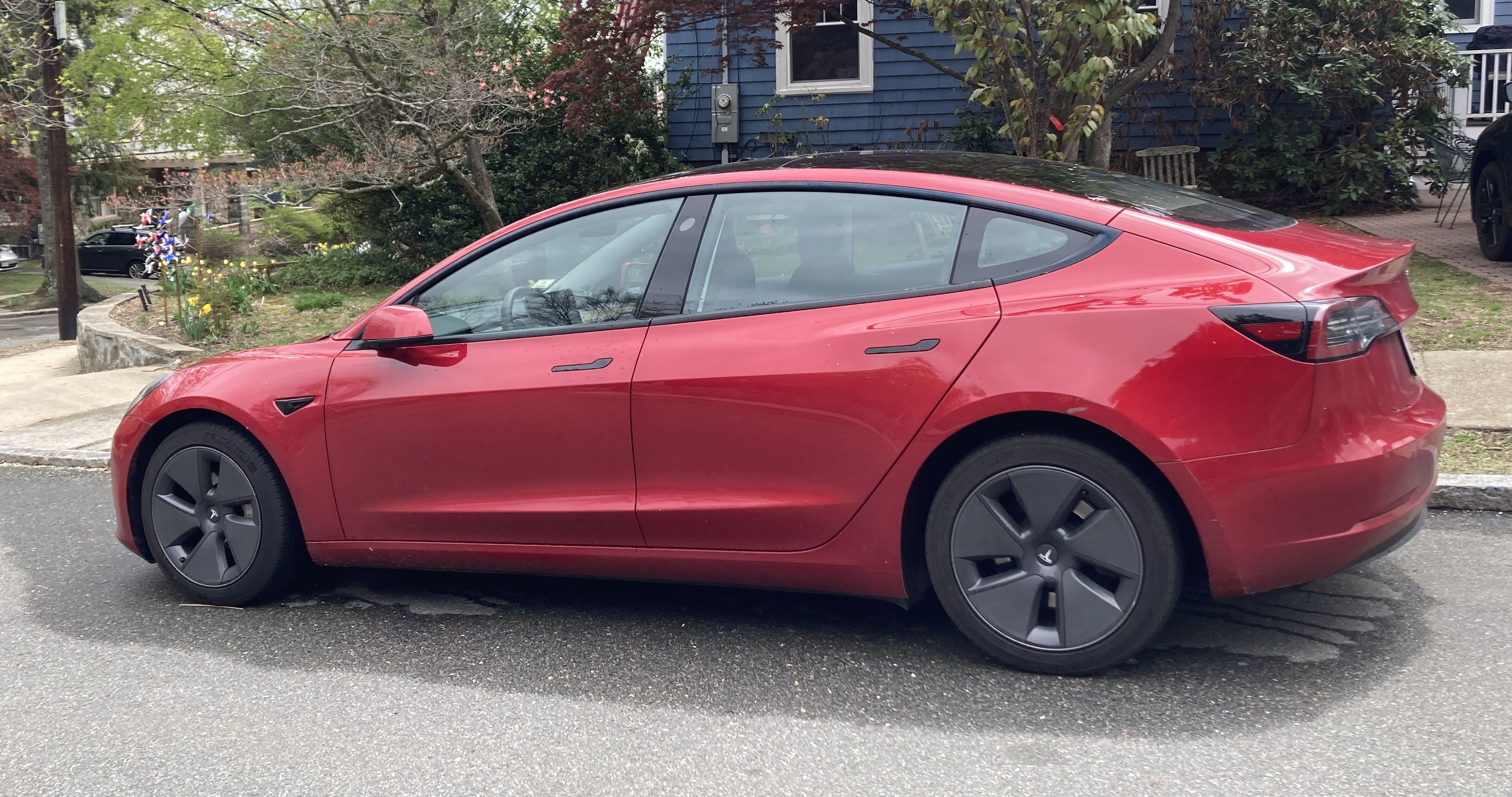
I got a red one in order to find it in parking lots, only to discover that everyone else had the same idea.
By early 2024, Musk was off the deep end. He speculated on Twitter that the guy who tried to murder the husband of Nancy Pelosi with a hammer was actually Paul Pelosi’s gay lover. JFC. I looked into doing an early lease termination on the Tesla. The phone app has a page for that, where it estimates the current value of the car on the used market versus its value at the end of the lease, and charges you the difference. They wanted $15,000. That was a lot more than it would cost to just pay off the lease. The value of used Teslas was already plummeting. I couldn’t see giving them that much of my money, and so found the monetary limit of my political outrage.
Then came the election in Nov 2024. The worst person to ever hold the office of US President was elected, again. George W. Bush was actually a worse President, what with missing 9/11, getting the US into two unwinnable wars, killing thousands in Katrina, and letting the fin-bros steal trillions in the Great Recession, but he wasn’t personally a criminal. Musk helped Trump quite directly by pouring money all over his campaigns and using Twitter to create a tsunami of disinformation about Harris and the Dems.
Then came DOGE. It turned out that Musk didn’t want to just cosplay being a Nazi, he genuinely wanted to destroy the country. His first target was USAID, which he illegally seized and even stripped the letters off the building. Literally millions will die without its medical and food assistance. He then started cutting a swath through every federal agency, firing people at random and seizing sensitive data for use in extortion and actual treason. Minutes after his minions broke into the legal databases of the NLRB, Russian hackers started attacking its systems using seized passwords.
He claimed that this was all being done in the name of efficiency, effectiveness, and debt relief. Incredibly, many commentators took him seriously, and said earnestly that everyone was in favor of that. No wonder he has such open contempt for the press. How gullible do you have to be to think that killing USAID, which is less than 1% of the federal budget, is being done to reduce the deficit?
Anyway, by February the Tesla lease termination was down to only $5000. My outrage budget could handle that. I finally put down a deposit on a new car, a Lucid Air Pure. The Lucid is also made in America, is the most efficient EV on the market, and has half again the interior space of the Model 3. They denied my lease application. I had an outstanding payment to GM for the Volt from five years ago, and it ruined my credit rating. It took me two months to clear that up. I had to mail a paper check to GM in Arizona, because they’re not yet in the 21st century. They actually cashed it and then lost track of it. No more GM cars for me. In the meantime the price of the Lucid I wanted went up by 15%.
So I dropped back nine yards and went for the Consumer Reports recommendation, a BMW i4 xDrive40:
Unlike the Tesla, it has a sunroof, a heads-up display, a dashboard display, buttons for the wipers and fans, actual blind-spot detection, Apple Car Play, and decent upholstery. Unlike Lucid, it has an excellent repair history. Like the Tesla, they give you a $7500 EV credit, even though it’s not made in the US and so doesn’t get the federal tax break. They also gave a $1000 “pirate” bonus for switching from Tesla. It turns out to cost only about 20% more than the low-end Model 3, yet drives and rides far more nicely. My daughter always got carsick with the bumpiness of the hard Tesla suspension, but is fine in this.
I returned the Tesla to the dealer on a recent Sunday afternoon. Normally this would be a busy time, but the place was empty. The Boston area has seen a constant stream of Tesla Takedown protests, but there weren’t any at that time. People were just sick of that guy. There have been big protests all over the area for the last couple of months, and Musk gets equal billing with Trump for people’s ire.
There are leaks from the Tesla board that they’re thinking of ejecting him from management. Good luck! Although he didn’t found the company, and has made catastrophic product design decisions with the Cybertruck and cancelling the Model 2, he has ensured that his name and its are one in the public mind. Just a few months ago they voted to give him 12% more of the company. He and Tesla are not going to be split, and are both going down the toilet together.











 A Niche in the Library of Babel