When People Were Proud of Their Government

If you happened to be driving around the Chestnut Hill Reservoir in Boston and saw this building, what would you imagine it to be?
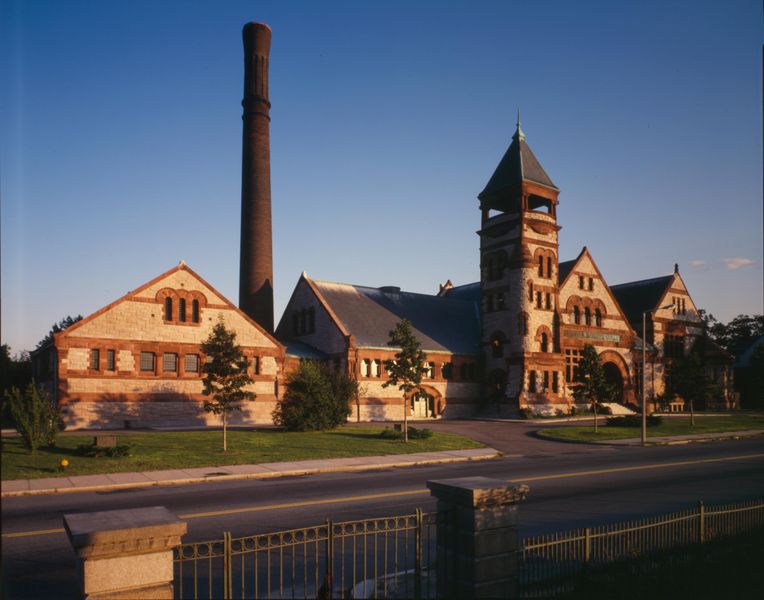
A town hall?  A library?  Those are certainly the kinds of buildings that got this Richardsonian Romanesque treatment in the late 19th century.   The huge smokestack is out of place, though.   It carried away the fumes from an enormous coal boiler.  That drove gigantic steam engines in the main hall on the right.   They pushed 30 million gallons of water a day eastward into the Boston water system.  This is the Chestnut Hill Pumping Station (also called the High Service Building), which was active from 1887 to 1976, and is now the Metropolitan Waterworks Museum.

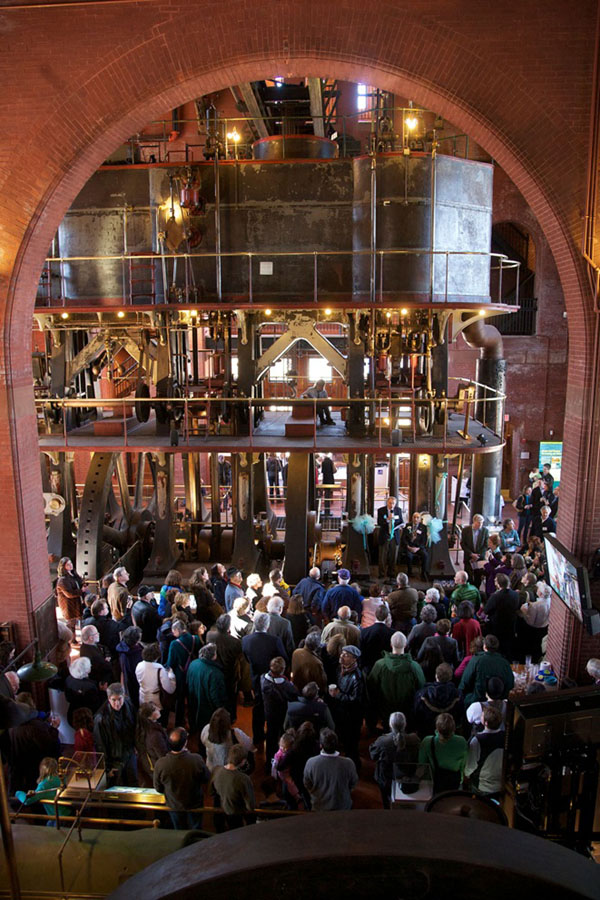
It’s an inspiring place to visit.    The engines themselves are awesome:
But even more inspiring is the civic effort it took to build a grand project like this.  By the late 19th century Boston was growing enormously from a huge flux of European immigrants, mainly Irish and Italians.   The Brahmin elite could have abandoned the old, cramped city and moved outward, as the white elites did in the 1940s and 50s when they fled to the suburbs during the black immigration from the South.   Instead, the Brahmins doubled down on their investments in the city.   They filled in the Back Bay, laid out a huge series of parks now called the Emerald Necklace, and built one of the world’s most advanced water systems.

Clean drinking water is the single most effective health measure ever devised, more so even than antibiotics.  There’s a great old documentary, “Water and the Dream of the Engineers”, wherein Abel Wolman, president of the American Water Works Association, looks straight at the camera and says “If it wasn’t for our work, half of you would be dead.”  You mainly get infected from the things you eat and drink, so keeping those clean immediately cuts out the prime way for bacteria to get into you.

This wasn’t fully established until the mid-19th century, with the discovery that cholera was spread by bad water.  They didn’t actually know about bacteria then, but some brilliant analysis by Dr. John Snow (as told in the riveting account “The Ghost Map” by Steven Johnson) identified the disease’s vector.  In 1854 he tracked a cholera epidemic in London to one particular pump on one street, went out and had its handle taken off, and saved hundreds of lives.

By the time the Chestnut Hill Reservoir was built in 1870, the value of clean water was well known.  The city was supplied at that time by Lake Cochituate in Natick, just outside Route 128.   A break in an aqueduct across the Charles River in 1859 convinced the city fathers that they needed a large reservoir closer to the city, so they laid out the enormous sum of $2.4 million to have Chestnut Hill built.    Oddly enough, there was another break in an aqueduct near that same location just last year, and it did in fact paralyze the city, and the Chestnut Hill Reservoir did actually preserve clean water at good pressure.  It only took 140 years for the Reservoir to serve its original purpose, but civil engineers need to take a long view.
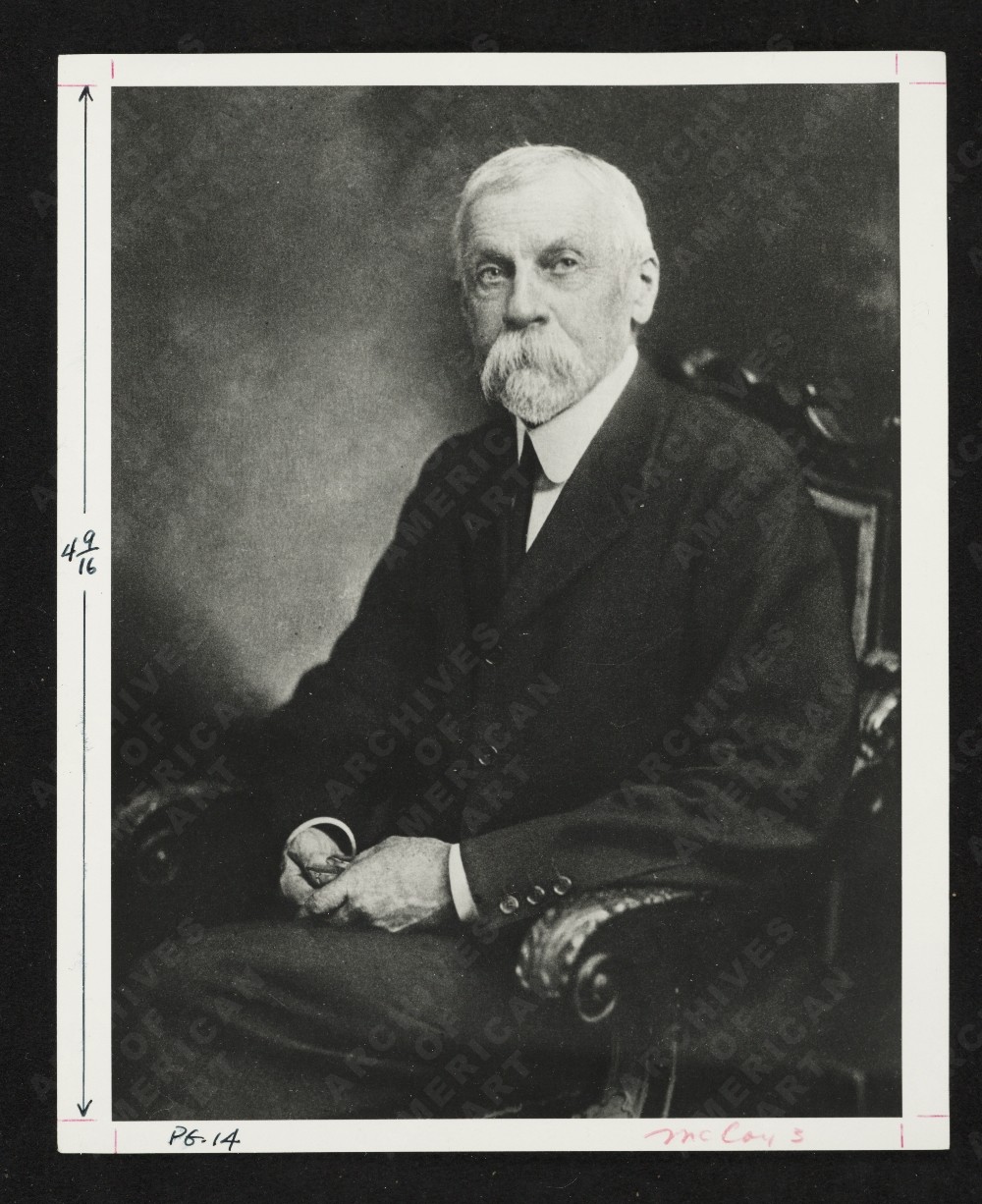
Portrait of Desmond Fitzgerald, ca 1920

Desmond Fitzgerald, builder of the Chestnut Hill Pumping Station, at age 74

Shortly after it was built, the multi-talented Desmond Fitzgerald became Superintendent of the Western Division of the Boston water system, and it was he who drove the building of the Pumping Station.   When it opened in 1887 in this beautiful building, all the luminaries of the city were there.   The Station meant that water could get to the top of every hill in the city, and that fire hydrants would always have pressure.    Fitzgerald systematically identified all the sources of pollution into Lake Cochituate and closed them down, and ran one of the first permanent microbial testing facilities in the Station.   He was also a personal friend of Claude Monet and John Singer Sargent, a great collector of their paintings, and a trustee of Boston’s Museum of Fine Arts.   In those days, a city physical plant manager was an important citizen, not a technician.

The Station ran well for almost 90 years, but then its coal power plants became obsolete in the age of diesels and electrics.   The buildings were sold off and re-developed as handsome condos.  One of the constraints in the developer contract, though, was that the Station Engine Hall would be preserved.

The Hall was cleaned up, and opened as the Waterworks Museum in March of this year.    You can walk around the engines but not inside them – a matter of liability.  There are displays all about, and a nice video of people in period costume talking about the opening of the Station.  The engines’ pistons haven’t moved in 35 years, but there are still people around who worked on them, so they hope to get them functional again soon.   Seeing these house-sized engines actually moving again would be a thrill!

I’ve long thought that the era of this Station, that of the latter 19th century, had the most progress of any in the history of the world.  It certainly had the most technical progress, what with the rise of the railroad, then automobile, then plane, plus the electric light, the telephone, radio, photography and films.    We think of our own era as moving at a dizzying pace, but we can claim only a couple of major advances, such as cellphones and the Web, compared to the dozens of that time.  Beyond that, though, it was a time of huge general progress, what with the abolition of slavery, the rise of universal education, and of democracy.

I think that this Station embodies one of the forces behind that progress – the idea of the public good.   No longer were things done just for the elite.   The elite could have had their own water carted to their houses, but everyone benefited more from a public water system.   Clean water meant that epidemics didn’t spread, that fires didn’t spread, and that food was safer.   The elite could have had schools only for their own children, but everyone benefited when everyone could read, figure, and contribute.   Electric light had been done for a few select venues like theaters, but it only really took off when everyone could use it, when the huge investments needed for it could be amortized across millions of customers.   Roads had been built for just toll-paying customers, but it wasn’t worth building bicycles and then cars until there were roads that could take everyone everywhere.

Serving the general public good instead of just the aristocracy unlocked a vast resource of innovation and energy that transformed the world.   Not all of that has been to the good, of course.  Even the Boston water system had its victims in the form of the towns of Enfield, Greenwich, and Prescott, which were drowned to form the Quabbin Reservoir in 1940.  Still, serving the public good is such a positive-sum game that its benefits have been huge.  It’s an idea that has always been under attack, even in recent years, but the Chestnut Hill Pumping Station is a great argument in its favor.

Posted in Uncategorized | Tagged , | 1 Comment

How Cool is Your City?

If you’re not familiar with the crowd-sourced art-funding site Kickstarter.com, go and have a look. This is a wonderful idea. People submit proposals for various kinds of cool projects to the site, which then posts them. The submitters say they’ll do the project if they can raise a certain amount of money, typically a couple thousand dollars. People can then pledge an amount to support the project. If they make their goal, the pledges are redeemed, and the pledgers get something from the project. It can be a discount on a CD, an early look at it, anything. If they don’t make their goal, no one owes anything.

I pledged for Blocklets, because I’m a sucker for construction toys. Probably the biggest success so far is Joulies, stainless steel coffee beans that cool your coffee to 140 degrees and then keep it there.  They asked for $9500 and raised $300,000; there are a lot of people with burned lips in the world. The site as a whole is raising millions a month, and has tens of thousands of projects.  About half meet their goals.  The site takes 5% of the amount raised, and Amazon handles the payments.

They list projects by city, so you can support your local talent.  I was curious about which cities are doing the most projects,  so I downloaded the number of projects for the 50 largest cities in the US.  New York is doing the most projects, of course, since it’s far and away the largest city and one of the most vibrant.     It’s more interesting, though, to find the number of projects per capita, since that tells you what the density of talent is in a town.  Here’s what it looks like as of today:


The city population data is from here and is for 2010.

So Portland is the coolest city in the USA!  That about jibes.   The rest of the top cities are also about what you would expect, with Atlanta and Minneapolis being pleasant surprises.   New York and Los Angeles have far and away the most projects, but are huge cities, and almost distinct countries.

As Kickstarter proceeds, I hope they do some statistics on their projects, the way that the dating site OK Cupid has on its hilarious blog OKTrends.   It would be interesting to know the characteristics of the projects that succeed in getting funding.  Do they tend to be art, music, sculpture, gizmos?   Are they big or small?  How much do they offer their pledgers?   It would be a chance to do some sociology on art!

Posted in Uncategorized | Tagged | Leave a comment

People Hate Being Outside

When people like to go outside (Arnold Arboretum)

Spring is here in New England, so we’re finally getting out and about voluntarily, instead of being forced to go outside in order to shovel snow or wade through the drifts to our cars.  The trees are budding, the daffs are out, and you can wear short sleeves without risking hypothermia.  It’s now actually pleasant to walk to places.

When they don't (Back Bay, Jan 2011)

Except when it’s raining.  Or when the pollen count kicks your immune system into overdrive.  Or when the wind lifts you off your feet.   It’ll be nicer in another couple of weeks, but then it’ll get too hot for anything but the beach. Then there’s another four week pleasant period in the fall, and then it’s winter again.

It makes me think about how little time I actually do spend outside.    There’s the voluntary stuff, the strolls and the sports and the gardening, but that only occupies a few hours a week and then only in the pleasant periods.   The involuntary stuff – the walks to the car, the snow shoveling, and the lawn mowing – really doesn’t amount to much.    If I average it out over the entire year, it comes to maybe 10 minutes per day.

If I used the bus or had to bicycle, it would be more.  If I had covered parking and someone else to shovel and mow, it would be less.  In fact, I think you can set up a wealth index according to how much time you have to spend outside:

  • Too poor – have to sleep outside
  • Poor – have to work outside, E.g. farm laborers
  • Doing fine – Spend an hour a day outside getting somewhere.
  • Rich – Drive everywhere, and only walk to or from cars.  (There are actually more vehicles in the US, 255M, then people 15 and over, 245M)
  • Too rich – Drive from a covered garage to a covered jetway.

It’s as if people don’t actually like being out in the open.  There’s, you know, weather out there.   Even farmers drive around in air-conditioned tractors these days.    If people aren’t avoiding cold and snow, they’re avoiding heat and UV.  Sure, they say they like Nature, but only when she’s in a very pleasant mood.   Most of Nature on most of the planet is pretty nasty.   We evolved while living outside, but that was a long time ago in a very different climate.   Now we avoid it to an extent that would astonish our ancestors.

Posted in Uncategorized | Leave a comment

Maniacal Energy Storage Schemes

A common complaint about renewable energy is that it’s intermittent – the sun isn’t always shining and the wind isn’t always blowing.  One rarely hears the opposite charge against nuclear power – it’s generating electricity even when no one wants it in the middle of the night – but renewable intermittency is a real problem.  So people have been devising all sorts of energy storage schemes for it.  Some methods are already well-established: pumped storage (pump water uphill then let it drain back E.g. the 2.7 GW Bath County Station), compressed air (fill a salt cavern to 40 atmospheres E.g. Huntdorf),   flywheels (E.g. Beacon Power), and huge battery arrays (E.g. Xcel sodium-sulfur project).

Sure, whatever.  They’re all sensible and economic and implementable, all the usual engineering virtues.   But they lack that tinge of madness that makes for interest.   E.g. anyone can build a highway bridge across a river, but the French recently built a highway bridge, the Millau Viaduct, across an entire river valley, with the road deck 900 feet in the air:

Civil engineering madness or genius? We show, you decide

For 400M euros, the French sure got a lot more tourist attractiveness than Boston did for the $16B it spent on the Big Dig.

But anyway, here are a couple of bizarre yet vaguely plausible energy storage schemes that I’ve seen recently:

  • Lakes of molten metal as giant batteries – Prof Donald Sadoway of MIT wants to build really big batteries, ones that can store gigawatt-hours, not just puny kilowatt-hours.  At that scale you can’t putz around with individual containers for your electrolytes; you need one gigantic sandwich of anode, electrolyte and cathode.   He describes one possible scheme here, which consists of a pool of antimony for an anode, covered by a pool of sodium sulfate for an electrolyte, covered by a pool of magnesium.  They’re of different densities, so they’ll keep themselves separate.  As current is put into the sandwich, magnesium ions separate out on top and antimony on the bottom, and the reverse happens when current is drawn out.  A battery big enough to supply New York City’s peak demand of 13 GW would need to be 60,000 m2, or 800′ on a side.   The whole thing has to run hot – magnesium melts at 650 C.   Sadoway says “we’re now looking at failure modes”, and given how magnesium burns on contact with oxygen, and how toxic antimony is, a fire would be a truly spectacular disaster.

    Discharged on left, then charging and charged

    He’s a great speaker, though, and goes over his idea in a lecture here, which I had the pleasure of seeing.

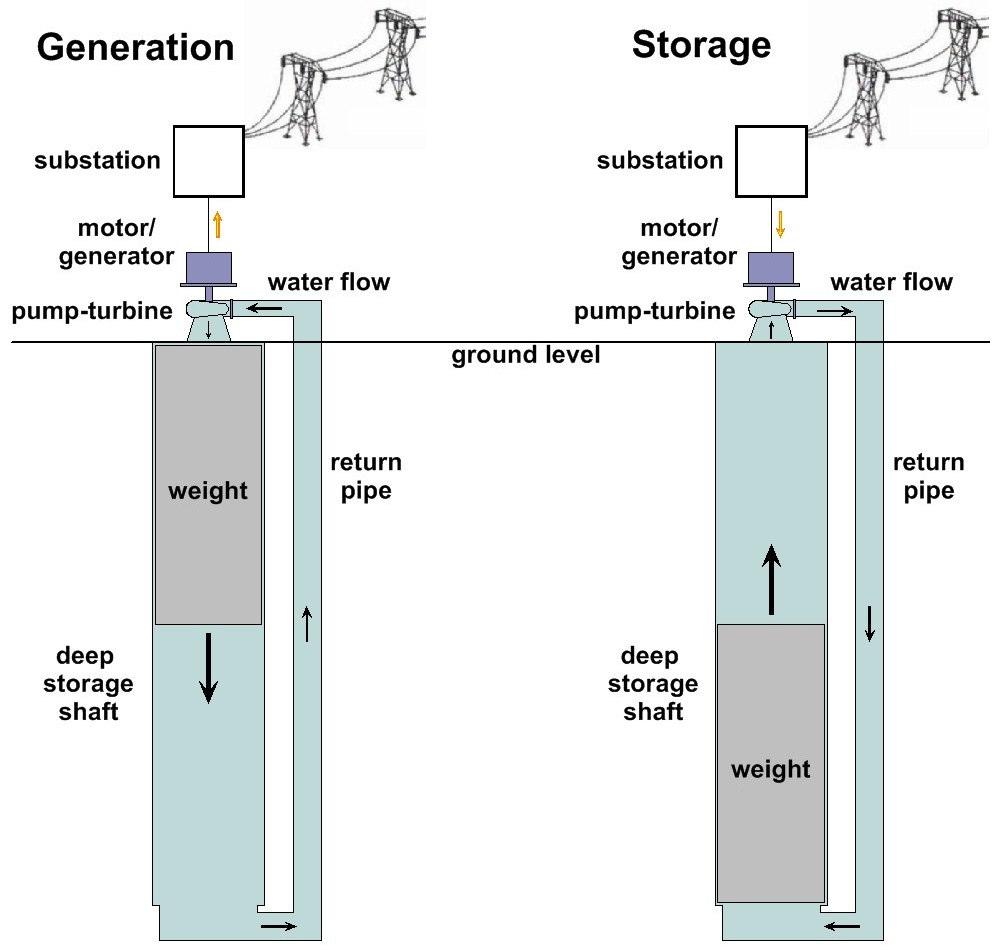
  • Moving big rocks up and down – A California startup, Gravity Power, wants to implement the pumped storage concept in places that don’t have convenient mountains.  Instead, they’ll dig a narrow, deep hole and put a huge concrete piston in it.  They’ll pump water underneath it to lift it up and charge it, then let it force the water out to discharge it:

    Its all good until the Mole Men attack

    The hole is 6m wide by 500m (!) deep. A unit that size can store 8.5 MWh with an 8000 tonne mass.  That’s only 500 Chevy Volt batteries at 16 kWh each, so this better be cheap and better be good for a lot of cycles.One key technology they don’t have is the combined pump/generator, and that’s what they’re working on. They also better have some good piston rings to keep that plug from sinking on its own.   Also, the first earthquake would hopelessly wedge the piston, so California is not the place to build this.

  • Use nukes to excavate deep caves and pump in and out – OK, no one is actually working on this, but it got quite a lot of discussion on DSquared’s blog here (see the comment thread starting at 2/07/11 by Chris Williams and Ajay).  A 1-megaton bomb set off at a depth of 1000 m to avoid surface cratering would give a chamber 160 m in diameter.  That would give it a capacity of ~ 6 GWh, about half the capacity of the major UK pumped storage facility at Dinorwig, Wales.   If you’re worried about radioactive water, set off two and pump between them.  Their host, DD, responded: “And the best bit about this plan is that nothing could possibly go wrong! I do like the idea of using nuclear weapons (which we can provide at little marginal cost, since currently the best-case outcome for them is that they get chucked away unused) to build renewable energy plants. I suspect that this would go a long way to addressing the common conservative objection to renewables Alex identified a while ago (ie, having a nuclear bomb involved in the process would make the electricity produced substantially less gay).”  Ajay then goes on to calculate that with two big caverns full of water, you could set off 1 kiloton bombs in them once a day and generate enough power to run the UK.  That’s the kind of carbon-free power that even Sen James Inhofe could get behind!

Update: Oh, and I should also mention a non-maniacal but elegant system used in the Victoria and Jubilee lines of the London Underground – the stations are about 1m higher than the tunnels.  That means that the trains rise up and slow down when they come into a station and speed up when they leave.   This is a kind of regenerative braking, and it apparently  saves 5% of the Underground’s electrical usage!   Ref: Sustainable Energy – Without the Hot Air (pg 125) by David MacKay, near the bottom.

Posted in Uncategorized | Tagged , , | 2 Comments

Electric Vans Already Win

Smith Electric vans in a green world

Update 5/13/11 – Smith will soon start using A123 batteries.  See bottom.

I wrote here about how electric cars were just better pieces of machinery than gas-powered ones, since they were quieter, handled better, and were more reliable.  This article, “Doing Delivery Rounds in an Electric Smith Newton” by Nick Kurczewski, talks about exactly this in the context of delivery vans in New York City.  Frito-Lay is slowly converting their 22,000-strong van fleet to battery-powered models, and will have 176 by this summer.   They’re built by Smith Electric, now of Kansas City but originally from the UK.  The Smith vans come in three sizes (12.8 to 16.7 foot wheelbases) and three payload capacities for each (7300 to 16,000 lbs), which is probably determined by battery size.

They range from $85K for a 40 kWh version to $135K for a 120 kWh.  The bottom end is still 1/3 more expensive than a diesel of similar size.   However, the diesels only get about 10 miles per gallon.   Assuming they drive 50 miles a day, and that diesel is $3.50 a gallon for big buyers, the break-even point is at only 4 years.   They should also be much cheaper to maintain, so the real break-even is likely to be even sooner.   At $500/kWh, there are $20K worth of batteries in this truck, so as that price falls (and as the price of diesel rises), the economics of electric vans will become overwhelmingly positive.

But the driver interviewed in the article loves his new truck not because it’s cheaper but because it’s so much quieter.   Diesels are so loud that they probably damage their drivers’ hearing after 10 or 20 years.   This truck is so quiet that he has to honk at bicyclists to let them know he’s there.

It’s too bad that New York can’t give Frito-Lay a credit for making its streets quieter.   There’s an unpriced externality – truck companies save money on noise mitigation but everyone else is distracted and annoyed.  On the other hand, New Yorkers are already plenty intense – if their powers of concentration weren’t ruined by street noise they’d be really dangerous.

The Smith vans use lithium-ion iron-phospate batteries from Valence Technology.  Valence builds the batteries in China and does most of its R&D there, but appears to be behind A123 Systems in battery power and density, and has long had financial problems.  A123 used to also build in China, but found that its technology walked out the door to competitors, and now they have a plant in Michigan.  A123 is supplying batteries to Navistar and Eaton for similar electric van systems, but Smith appears to be ahead of them for the moment.

They’re also pioneering new markets on military bases.  Diesel fuel is pretty expensive for civilians, but it’s insanely expensive when it has to be driven across Afghan mountain passes while being shot at.  Reliability matters there too.  In this, as in so many other areas, the US military might be setting US industrial policy.   Maybe electric vehicles will lose their crunchy-granola, tree-hugger vibe when they’re being driven by crew-cut Marines.

Update 5/13/11 – I mentioned that Smith was using batteries from troubled Valence Technology.  A123 has just announced that they will be supplying Smith with batteries too:  A123 Gets Needed Jolt with EV Truck Contract.   They hope to ship 500 to 700 truck’s worth this year, and several thousands next year, mainly from their plant in Michigan.  A123 has their own serious financial problems, but they have a lot of design wins in the pipeline.  One of the more interesting is for a 12V lithium-ion battery to replace the lead-acid one in cars.  It permits the engine to be shut off and restarted much more easily, and can store power from regenerative braking.  They claim a 15% mileage improvement, which would be huge if true.

Posted in Uncategorized | Tagged , | 1 Comment

The Research Organizations of the World as seen at ISSCC

Thousands of engineers on break at ISSCC

As described in the last entry, the International Solid State Circuits Conference (ISSCC) is the largest and most important electronics conference in the world. That entry listed which countries and US states contributed the most papers to it. How about organizations? Which companies, labs, and universities do the most significant electronics research? I did a similar tally for the conferences at decade intervals starting in 1960. For brevity’s sake I dropped organizations that had only contributed one paper in all that time. Some organizations have spun off other operations in this period, and I’ve tried to list the ones I know about together.

Let’s start with the companies that have contributed papers:

ISSCC Papers by For-Profit Organizations
Total Organization Name 1960 1970 1980 1990 2000 2010
45 IBM 7 5 6 5 14 8
40 Bell Labs, Lucent 6 13 6 3 12
21 Hitachi, Renesas 5 5 7 4
21 NEC 2 4 6 6 3
19 Philips, NXP 1 3 1 5 5 4
18 Toshiba 2 3 5 8
17 Fujitsu 5 8 1 3
17 RCA 5 9 3
16 TI 1 4 4 3 4
15 Intel 5 4 6
14 Analog Devices 1 3 4 3 3
12 NTT 5 1 4 2
11 Matsushita 1 3 4 3
10 HP, Agilent 1 3 2 2 2
8 Mitsubishi 2 3 3
8 Motorola 1 1 1 1 4
8 Sony 1 2 2 3
7 Samsung 1 6
5 Fairchild 1 3 1
5 Infineon 4 1
5 National 1 2 2
5 Sun 4 1
4 Bell Northern, Nortel 1 1 2
4 GE 2 2
4 Hughes 1 2 1
4 ST Microelectroncs 2 2
3 Hynix 3
3 Hyundai 3
3 Mostek 3
3 Rockwell, Conexant 1 2
2 Advanced Circuits 2
2 Alcatel 1 1
2 AMD 2
2 Broadcom 2
2 DEC (Compaq) 1 1
2 EG&G 2
2 General Instrument 2
2 Harris 2
2 Marvell 2
2 Precision 2
2 Rambus 2
2 SGS Thomson 2
2 Siemens 1 1
2 Signetics 2
2 Sperry 1 1
2 Tektronix 2
2 Westinghouse 1 1

The leaders here, IBM and Bell Labs, are not surprising. They have both been major innovators since the 19th century. Notice, though, that Bell Labs had nothing in 2010. They’re now part of the French company Alcatel, and are still somewhat active, but only in far more applied areas. This is part of the ongoing collapse of corporate research in the United States. IBM is the only major company that still does basic science. Notice how GE faded long ago, HP and Motorola are on their way out, and RCA is gone altogether.

Also notice that Philips is the only European company in the top 10. Electronics appears to be the domain of the US, Japan, and recently, Korea.

How about research labs and universities?

ISSCC Papers by Non-profit Organizations
Total Organization Name 1960 1970 1980 1990 2000 2010
13 MIT 1 1 2 3 6
13 Stanford U 1 3 3 5 1
12 IMEC (Belgium) 4 8
12 UC Berkeley 2 2 2 3 3
7 Delft U (Netherlands) 1 6
7 KAIST (Korea) 3 4
7 UC Los Angeles 1 4 2
6 National Taiwan U 6
4 Columbia U 1 3
4 ETH Zurich (Switzerland) 2 2
4 Hong Kong U 1 3
4 U Leuven (Belgium) 1 1 1 1
4 U Michigan 4
4 U Pavia (Italy) 4
4 UC San Diego 2 2
3 Fraunhofer Institute (Germany) 1 2
3 Keio U (Japan) 3
3 U Florida 1 2
3 U Toronto 3
2 CSEM (France) 1 1
2 Harvard U 1 1
2 Helsinki U (Finland) 2
2 Oregon State U 2
2 Politecnico (Italy) 2
2 Shizuoka U (Japan) 2
2 SRI 1 1
2 Tohuku U (Japan) 1 1
2 U Illinois 1 1
2 U Tokyo (Japan) 2
2 UC Davis 2
2 Yonsei U (Korea) 2

Again, no surprise at the leaders: MIT, Stanford, and the University of California at Berkeley. However, the UC system as a whole has 25 papers, twice as many as any other. The different campuses do have separate identities, though, so I’ve split them up here.

Of more interest are the institutions down the list. IMEC is the first non-university shown.  It’s a huge government lab (it employs 1750 people) in Belgium devoted to micro-electronics, and it’s become a real center for it in Europe.   The University of Leuven is near it, and has been doing important research for a long time.   Because of Philips I knew that the Dutch had been doing big work in electronics (and now Delft University is important), but who knew that the Belgians were so active?

The only other non-unversity is the Fraunhofer Institute.  It’s a vast enterprise at this point, employing 18,000 people in 60 centers, with a budget of ~$2B.  About 7% of that comes from its patents on MP3.   It mainly does contract research, but gets 30% of its budget from the German government.

In the last decade there has been a lot of work from Asia outside of Japan, but also notice how work is spreading in the US to various state universities.   As the conference has grown, and as electronics has spread, we’re seeing contributions from more and more parts of the world.

Posted in Uncategorized | Tagged | 5 Comments

The Technical Progress of the World, as seen at ISSCC

The world’s largest, oldest, and most important electronics technical conference is the International Solid State Circuits Conference, ISSCC.  It’s been held every year since 1954, about as long as there have been solid state circuits, i.e. transistors.  It was originally held at the University of Pennsylvania, then alternated between New York and San Francisco, and is now in San Francisco all the time, that being the closest city to Silicon Valley.

I’ve been going for a long time, and every year there’s something astounding.  This year Tim Denison from Medtronics described the latest generation of pacemakers: a little capsule about the size of a Contac that can be implanted directly on the heart muscle.   It contains a battery good for ten years, a wireless telemetry system, and a processor capable of monitoring the heart and stimulating it.  It uses MEMS accelerometers to measure the actual motion of the heart beating.  He also described Deep Brain Stimulation (and who doesn’t want that?), which is where pacemakers implanted deep in the brain can correct for dystonia, epilepsy or even depression.  “We are fundamentally electrical beings,” he said, and managing the flow of electricity around our bodies is critical to our health.

Continue reading

Posted in Uncategorized | Tagged | 1 Comment

The Long View

Fall Winter 2010 Issue devoted to Climate Change

At a time when the US Congress is divided on whether climate change even exists, the Massachusetts Audubon Society is making plans on how to adapt to it.   Their problem is that climate change emperils their nature sanctuaries.   They own 34,000 acres of land in the state, about 0.5% of the total, making them one of the state’s largest private landholders.   The Commonwealth itself only owns 4%.  Their forests are meant to be preserved as habitats for various bird and animal species, but as the forests change, the animals inevitably will too.

Tom Lautzenheiser writes about this here in the Fall 2010 issue of their magazine Sanctuary.  He points to videos like this one, showing how spruce forests have migrated across the continent since the last Ice Age, as determined by pollen counts.   The global temperature was about 8 deg C less then, and we’re looking at an increase of about 6 deg C in this century, according to the IPCC, and who knows what beyond that.

Continue reading

Posted in Uncategorized | Tagged , | Leave a comment

Edward Tufte – Guru of the Information Class

I recently had the pleasure of taking one of Edward Tufte‘s seminars, “Presenting Data and Information”.  He’s a professor emeritus of statistics, political science, and computer science at Yale, and the author of an important set of books on charting: “The Visual Display of Quantitative Information” (catchy title) (1983), “Envisioning Information” (1990), “Visual Explanations” (1997), and “Beautiful Evidence” (2006).

Seminar textbooks, but at no extra charge

He published these himself, and gave them out at the seminar.  Not only are they full of good and bad examples of how to present things, but they themselves are samples of what he is talking about in terms of being beautifully laid out, clear, and honest.

The last point is what makes him something of a cult figure.    There were hundreds of people at this seminar, and he gives dozens of them every year.  That’s far less than the turnout at, say,  Tony Robbins cult sessions, but it’s pretty good for a retired professor.

The interest in him comes, I think, from his insistence that there is a moral quality to how one presents things.

Continue reading

Posted in Uncategorized | Tagged | 2 Comments

Anti-Romantic Lighting

Fluorescent lighting induces existential despair

If you’re ever taken out to dinner to a restaurant with fluorescent lighting, you can be pretty sure that your date is an idiot.   That’s the least flattering kind of light known.  Well, maybe it’s not as bad as yellow sodium street lights, but truck yards are not exactly places for romance either.   Fluorescents are heavily blue, which causes skin to look less healthy and shows up blemishes.   If a restaurant uses it, you can be sure that they’re cheap, which also doesn’t speak well for your date.

But fluorescents are the lighting of the future!  Or at least they will be next year in the US, when 100W incandescent bulbs will no longer be sold.  By 2014 even 40W will be illegal.   Everyone else is banning them too; they’re just too inefficient.   Incandescents have had a 130-year run since Edison’s first plant, which is a pretty long for a technology ( E.g. steam locomotives only lasted for 100), but they’re done for.  Unfortunately, fluorescents aren’t that good a replacement: they’re slow to start, hard to dim, not as reliable as claimed, contain mercury, and the light color is poor.

So everyone is working on the next technology after fluorescents, LEDs.

Continue reading

Posted in Uncategorized | Tagged | 2 Comments