
Here’s a quick dump on some novel ideas: satellites in very low orbits so they can take better pictures, using electric jets to deorbit space junk, and a rocket plane with big ambitions from New Zealand!
Very Low Earth Orbit Satellites
Space officially begins at the Karman Line, 100 km, but all current satellites orbit a lot higher, above 350 km. The atmosphere up there thins out enough so there isn’t much drag. There’s still some – the ISS is at 400 km and needs to be reboosted about once a month. The range between 100 and 350 km is called Very Low Earth Orbit, VLEO. There’s a lot more drag there, and that’s actually an advantage since the satellites deorbit themselves and there’s no space debris to hit them. Being closer to the surface means it’s much better for optical imaging, and far better for radar and lidar imaging. It has just gotten its first commercial customer – the Clarity-1 satellite by Albedo Space:
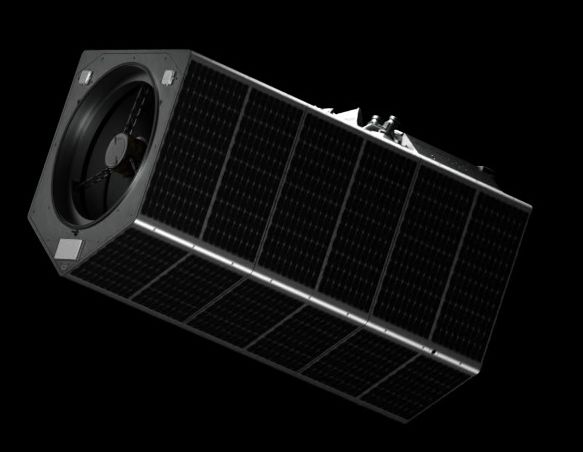
It’s about the size of a refrigerator, and will orbit at 275 km. That big aperture at the end is a telescope pointed at the ground. It can take pictures at 10 cm resolution, while typical satellite imagery is at 30 cm. You can get the picture 30 minutes later. It’ll fly over every spot on Earth every 15 days, which will drop to 2/3 of a day when the whole constellation of 25 satellites is up. Those solar panels drive a xenon-fueled ion thruster. There’s a phrase that tells you we’re living in the future! It ionizes xenon gas and accelerates it out the back. When the xenon runs out in about five years, the satellite burns up. It may burn up earlier because oxygen molecules that high up get turned into lone atoms that corrode everything they touch. This mission will see how bad that is.
10 cm is about enough to recognize the make of a car. Albedo touts it for us in agriculture to track field growth, in urban areas to track land use, in supply chains to monitor shipping, in climate research to verify models, and of course in the military to see where everyone is.
Electric Jet Propulsion in VLEO
275 km is still kind of high. How could we get more thrust to fly lower? By using the air itself as reaction mass. Instead of ionizing xenon, you ionize the air itself and accelerate it, just like a jet. There are several companies working on this. The one that appears to be furthest along is the general space tech company Redwire, which is pitching SabreSat for the US military:

Last year they got a DARPA contract to build this, using propulsion systems from either the Electric Propulsion Laboratory in Colorado, which got $5M, or from Phase Four in Los Angeles, which got $15M. No word on time frame, though. Like Albedo, they want to use it for imaging. They’ll get a lot lower, like 150 km. The satellite actually needs to be aerodynamic at that point, and thus the wings.
One positive aspect of this compared to normal reconnaissance satellites is that if it’s taken out by an anti-satellite weapon, the pieces will deorbit on their own. LEO is already full of junk from previous anti-satellite attacks by the Russians and Chinese. Recon sats are the natural targets, so this is bound to happen more. Space war will happen at some point, but it shouldn’t poison the environment in the way that, say, mine fields poison a landscape.
More ambitious but much smaller is Viridian Space, which wants to not just fly at a low orbit, but get enough thrust to get to LEO at 500 km. They want to build an air-refuelable satellite, able to change orbits at will. That would let them pop up, grab a piece of space debris, and bring it down to let it burn up. It might take a year to move up and down this way, but put enough of them up and then can do a lot of cleanup. They’re vague on the details, but I think this means that they actually want to capture air for use in the higher orbit. Collecting air at 8 km/sec will be … interesting.
Dawn Aerospace Rocket Planes
It’s obviously ridiculous to throw away a whole rocket after one launch, so people have always thought about adding wings so that it can fly back. That was the idea for the X-15, and for the Space Shuttle itself. In those cases the rocket plane was the last stage, but it’s the first stage that is actually the expensive part. It also turns out to be much harder to dump all the energy from orbital velocity than it is from relatively slow first stage. Thus SpaceX reuses the first stage of the Falcon9 almost all the time, and will reuse the first stage of Starship, the Super Heavy Booster, as well.
Yet developing those was horribly expensive – they crashed and blew up a lot. The Starship program has already spent at least $5B. That’s one reason why no one else has gotten reuse to work in the 10 years since SpaceX first did it – the R&D cost didn’t justify the return. Even SpaceX, the most successful launch company ever, only made $4.6B on launch in 2024. The smallest company on the Fortune 500 has sales of $7B, so it’s in the noise. The real value for SpaceX is in launching the Starlink Internet communication constellation, which is already making a lot more money than launch.
One answer to developing reuse is to find a much less expensive way to do it, and that’s where the plane comes in. It can be launched again and again, allowing all its systems to be tuned up. That’s just what Dawn Aerospace has done with their first craft, the 1/4 scale Mk IIA Aurora:

The spectacular scenery is from the South Island of New Zealand, where they have their runway. It doesn’t need an elaborate and expensive launch pad. They’ve already flown it to Mach 1.1 and 30 km. It’s not big: 4.8 m and 350 kg. It’s remotely piloted with steadily more autonomy. The rocket engine burns kerosene and 90% hydrogen peroxide, which does not need to be cooled like liquid oxygen, and so is much easier to handle.
The next generation is the Mk-IIB, which they hope to get to 110 km and Mach 3. It’ll have a 5 kg payload of a 3U cube-sat. It can deliver small packages to 300 km away in minutes, or provide 180 seconds of micro-gravity for experiments, or test hypersonic structures. The next step is the big one: the Mk III at 22 m, 23,500 kg, and capable of launching a second stage into orbit. It could deliver a quarter to a third of the delta-v needed to achieve orbit, which is a bit less than what the Falcon9 first stage does, and it would be for much smaller payloads.
Sadly, that might not be viable. Falcon9 launches so often that it’s easy to get ride-share cube-sats on it, which cuts into the market for smaller launchers. Rocketlab does all right in that niche, but they’re building a much larger rocket, Neutron, to compete directly. Still, there’s a high coolness factor for this Dawn approach, and launching with them would mean you get to visit New Zealand. Here’s wishing them luck!
 A Niche in the Library of Babel