
The executives of companies often take credit for the innovations that their lead technicals actually created, and erase them from company history. This is hardly surprising! It seems common enough that I’ve come across it in a number of previous posts:
- Obscure Creators of the World #3 – Jack Ryan – Ryan did most of the work on Barbie and Hot Wheels, but the execs of Mattel, Ruth and Eliot Handler, cut off his royalties and wrote him out of their history.
- Obscure Creators of the World #1 – Federico Faggin – Faggin invented the product that defined Intel, the microprocessor, but got such little respect from its CEO, Andrew Grove, that he left and built a better one, the Zilog Z80.
- “The Founder” as Design vs Management – the McDonald brothers figured out how to deliver tasty and cheap fast food, but Ray Kroc took over their company and denied them the use of their own name.
- Keurig Dumps Inventor, Builds Millions of Junk Coffee Makers – John Sylvan invented the Keurig coffee pod system, but investors headed by one Ben Stiller (not the actor) took the company away from him and gave it to Green Mountain Coffee.
Unfortunately, there are some much more famous cases of this. Let me start with a widely respected figure, Steve Jobs, and then talk about one whose reputation has cratered, Elon Musk:
Steve Jobs erases Steve Wozniak, Jef Raskin, and Tony Fadell

You may have heard of Wozniak, since he was the co-founder of Apple and has become a beloved elder statesman of tech. He did the hardware design for Apple’s first two computers, the Apple I and Apple II, and also designed the floppy disk interface for the II and the Mac. The disk interface alone may have saved the company, since it was much simpler than other controllers and therefore let disks be sold for far less. The II was a massive hit, and they both made a pile when Apple went public. Jobs kept all his, but Woz gave away a lot of his stock to other deserving employees. Just as he got going on next big thing, the Macintosh, he was in a serious plane crash and had to drop out of it. Jobs took it over, and re-directed the entire company towards it. Wozniak and the entire II design team were shut out of further developments. He quit Apple in 1985 in protest. He did join again later, but has been mainly a representative than a contributor. He has been in a lot of interesting companies since then, but nothing has connected. He did help found major tech institutions like the Electronic Freedom Foundation and the Computer History Museum.
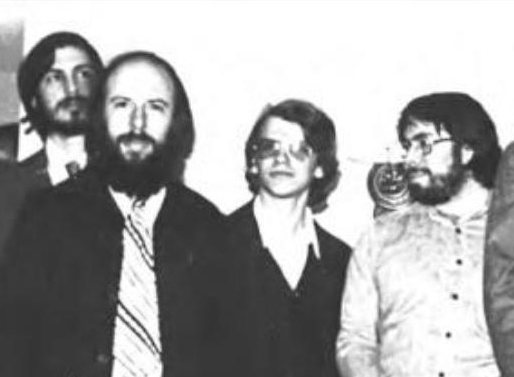
Jef Raskin wasn’t nearly as important figure at Apple, but he did run the Macintosh development for the first year, and did drive towards the idea of the PC as an appliance that anyone could use, and did introduce Jobs to the Alto GUI at Xerox PARC. That was the single most revolutionary idea ever in personal computing. Jobs then took over the project and shoved him aside. He left Apple in 1984, but did receive the millionth Mac built with his name on a gold plaque on it. He had a vast range of interests, but didn’t contribute much later, and died young in 2005.
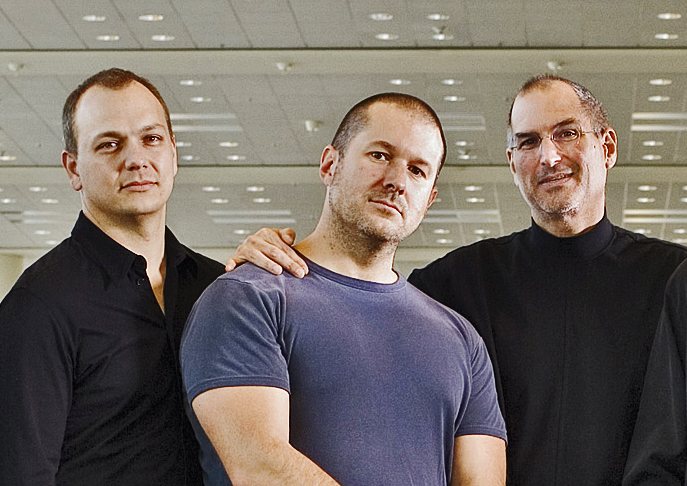
After the Mac the next big innovation at Apple was the iPod, and that was the creation of Tony Fadell. He had been at General Magic, a spinoff run by Macintosh designers, and then at Phillips. He quit there when he got a seriously great idea – build a portable music player with a tiny hard disk that could hold a thousand songs, and have an online library to get them from. He started a company for it, Fuse, but couldn’t quite get funding. Jobs heard about it in 2001, and contracted him to build it. He got it going in just 11 months, and it was an immediate hit. He became a VP in 2004, and made major contributions to the iPhone as well. He quit not long after that in 2008, perhaps due to burnout. He started a new company in 2010, Nest, which made creepy home thermostats that would monitor the house for when people were actually there. Google bought it for $3.2B in 2014, and has expanded the line hugely in its effort to make money off of everything they can conceivably learn about you. Fadell left in 2016.
I did actually meet Fadell once in 2002. I pitched a video processing chip that my startup had just developed for use in a video iPod. The meeting was crisply efficient! In fifteen minutes he told us what the chip’s performance, schedule, power, and price had to be. Sadly, we couldn’t meet any of it at our size. We did almost get into the company that built the main chip in the iPod, Portal Player. That deal failed due to our CEO’s ego, but that’s another story.
Now, it’s not too surprising that Jobs eclipsed all these other people. He was actor-level handsome, he was an expert showman, and he was utterly ruthless. He cheated Woz on their very first job together on a contract at HP. He drove people mercilessly, and treated them badly, but appears to have mellowed in his later years. Oddly enough, most of his fortune came from his investment in Pixar rather than all he did at Apple.
Elon Musk erases Martin Eberhard and Marc Tappening, and Peter Rawlinson
Given his recent behavior, it’s no surprise that Musk has bullied people throughout his career. Two early targets were the actual founders of Tesla, Martin Eberhard and Marc Tappening:

They came up with the core ideas of Tesla: to build a stylish and zippy but green car by exploiting the power of thousands of standard lithium-ion batteries and the great torque of electric motors. They had a novel strategy for EVs – start at the high end to develop the tech and then work down, instead of trying to produce the Model T right at the start. Musk led their first round of investment about a year later, and put in about a third of the funding before the first product, the Roadster, was released in 2008. Unfortunately, that give him license to meddle endlessly in the design. He tweaked the dashboard, the head and taillights, the seats, and worst of all, demanded that this electric car have a transmission. He thought a sports car should be able to do 125 mph vs the 110 that it could do with a single fixed gear. This was stupid, and cost them a year of schedule, an expensive extra component, and a loss of reliability and range. No other EV ever did this.
Nonetheless, the car was a hit when it was first unveiled. No one else was close to a car this cool. The press fawned over Eberhard and Tappening, and that made Musk’s head explode. He forced the ouster of both of them a year later, and proclaimed that he was the founder. Eberhard sued over that, and finally settled for an undisclosed sum. The two of them have since been shoved aside in the EV space, but made a fair amount off their Tesla stock.
A two-seater like the Roadster had limited appeal, though, and the design wasn’t suitable for mass production. Tesla’s next product, the Model S, was what really broke the market open:

They needed a real car guy for the Model S, and they found one in Peter Rawlinson, who had introduced CAD to Jaguar, had headed engineering at Lotus, and was at the last remnants of British Steel, Corus Automotive. He joined Telsa in 2009 at Musk’s personal invitation. Most of the previous team had left, unsurprisingly, which left him free to hire whoever he wanted. He used massive simulation techniques to get the Model S done in only 3 years. A key aspect of it was system-level design, of getting features in one part to make use of optimizations in another part. For example, the car needed strong anchor points for the seat belts on the bottom of the chassis, so they made them part of the battery pack partitions that underlaid the entire floor. In the picture above he’s explaining how the car front trunk acts as a crumple zone for head-on accidents.
Yet he was nowhere to be found at the Model S introduction in June 2012. He had actually quit a few months before. He said he needed to take care of his ailing mother back in England. He denied that it was due to pressure from Musk, since he felt enormous pressure from himself to really make an EV work. His mother passed away not long after, and Musk asked him to return, but he was already interested in doing something on his own. Musk then denied that he had done much on the S. Yet the S is what really saved Tesla and established that EVs could be way better than internal combustion cars.
Rawlinson then went on to found Lucid Motors in 2016, which has concentrated far more on the straight car aspects of an EV than Tesla has, which has been distracted by very-much-unready self-driving features. Lucids look great, and apparently have a genuine luxury feel, and have dramatically improved the miles/kWh, the internal networking, and the over-the-air updates. They’ve had a slow start, and still only ship about 10,000 cars a year, but get a lot respect, unlike Tesla.
Jobs and Musk, as well as the other execs mentioned above, really were good businessmen. This is not a common skill! You would think that the enormous amount of money they all made would be enough, but the true currency of America is celebrity, and that’s what they all craved. They have to be the people on stage. Jobs could hold the audience spell-bound, while Musk has gotten more and more cringey, but they couldn’t share the spotlight with anyone, especially those who contributed as much or more than they did.
 A Niche in the Library of Babel